Employee Engagement, Performance, and Retention: The Capacity Concern
There is no shortage of data and reporting around the decline in employee engagement.
Just a simple search on the topic presents headlines that would make any leader take pause.
Organizations often treat burnout, disengagement, and turnover as separate problems; yet, they are frequently symptoms of the same underlying issue: declining employee capacity.
With an increased blending of work and life, the lines have been blurred and boundaries have been moved.
Moreover, an increase in workload and expectations have pushed people to the brink.
Nearly 7 in 10 U.S. employees are not engaged (Gallup)
72% of employees report moderate to very high workplace stress (AFLAC)
77% of employees have experienced burnout at their current job (Deloitte)
Employees experiencing burnout are up to 6x more likely to leave (McKinsey)
The metrics offer true insight into the realities of today’s workforce: productivity is lower, burnout is common, disengagement is prevalent, and turnover risk is real.
When the cost of replacing just one employee can skyrocket to 200% of their annual salary, retention metrics are a valid priority.
This doesn’t even touch on the loss of continuity, productivity, and knowledge that results from an exiting employee.
Multiply that as higher-salaried employees leave and the cost impact can be substantial.
Strengthening The Capacity Behind Performance
Organizational performance and capacity are under more strain than ever.
At the individual level, the weight of this reality is felt long before it shows up in retention reports, productivity measurement or financial performance.
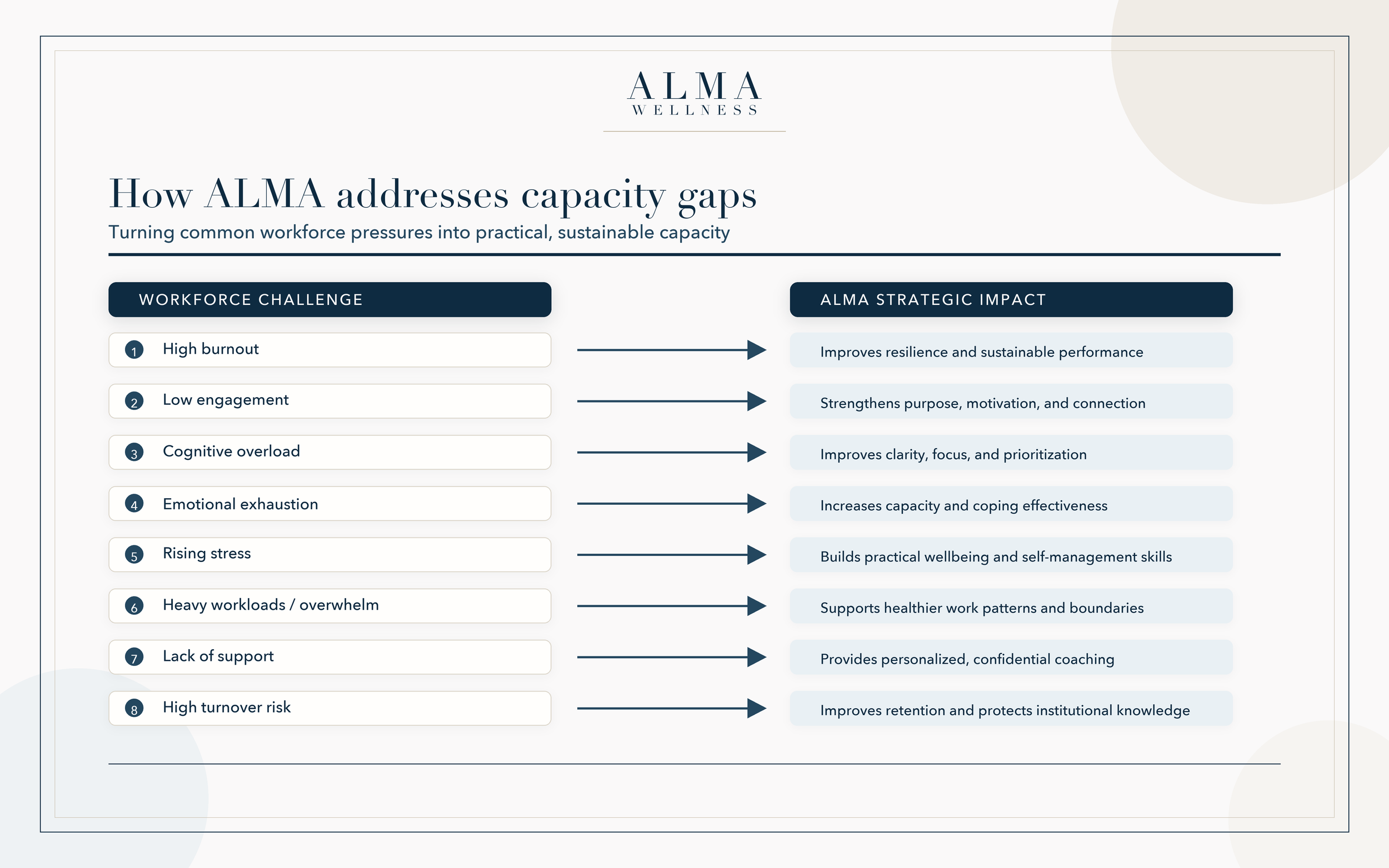
There is a disconnect between the current suite of health and wellness offerings and their impact on today’s workforce.
Enterprise-wide programs don’t offer the level of personalization or have as direct an effect on organizational strength as wellness coaching provides.
The tailored, confidential support is unrivaled, and what highlights coaching even more is that the outcomes elevate both employees and their organizations.
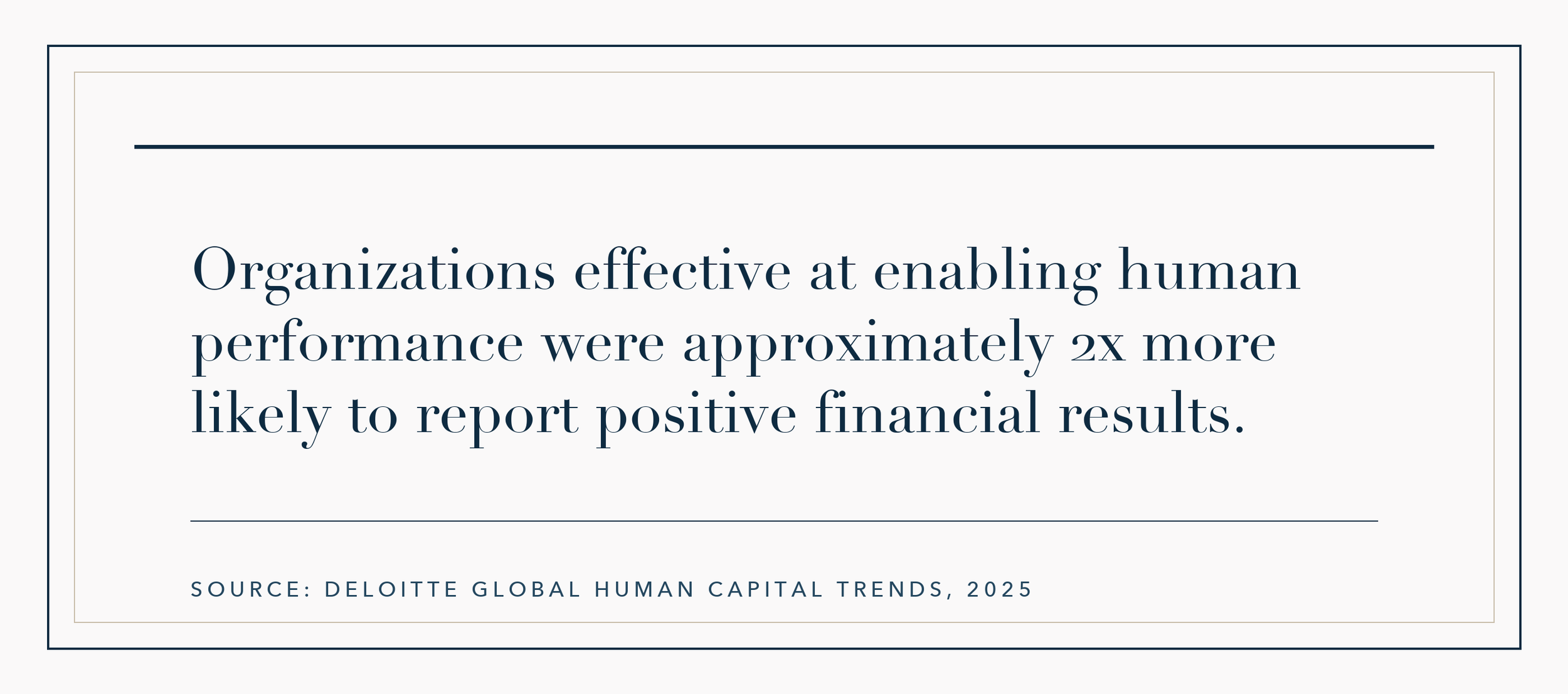
Human Performance Is Linked To Financial Performance
Increased employee productivity, lower turnover and replacement costs, reduced absenteeism, and better customer service are just some of the ways in which employee engagement has a direct impact on an organization’s financial performance.
According to Gallup’s 2026 global workplace study, "Last year, low engagement cost the world economy approximately $10 trillion in lost productivity, or 9% of GDP.”
It has become clear that simply investing in employee wellbeing is not enough.
The real benefits are seen when employee wellbeing translates into higher engagement.
Alma Is Your Strategic Wellbeing Partner
Industry leaders continue to deliver the same message: employee engagement is low, capacity and engagement are eroding, and the impact on business is clear.
Yet the question remains: how can organizations proactively strengthen workforce capacity before burnout, disengagement, and attrition become organizational challenges?
ALMA can help close the gap between employee wellness and organizational strength.
Through individual health and wellness coaching, ALMA strengthens the people who drive the metrics.
About ALMA
ALMA partners with organizations to build healthier, more resilient workforces through confidential, individualized health and wellness coaching that supports employee wellbeing while strengthening organizational performance.
Related Articles